

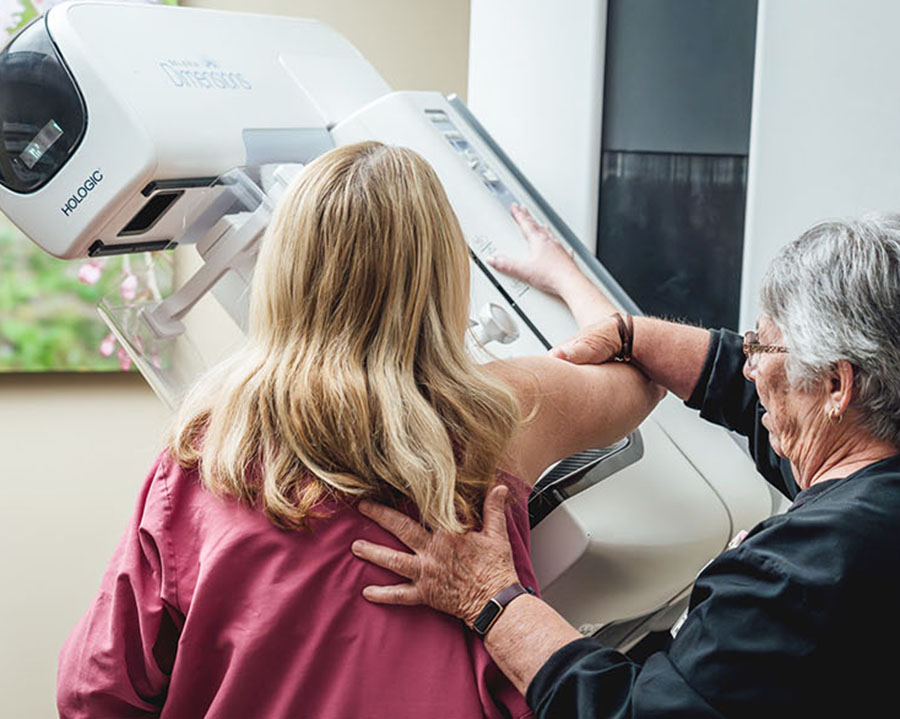
Did your last mammogram report say you have dense breasts? It’s more common than you think. Almost half of all women who get mammograms are found to have dense breasts. So, what does that mean?
Understanding Dense Breast Tissue
Breast density describes the different kinds of tissue that show on your mammogram. Your breasts are made of fat, connective tissue and milk ducts and lobules that together are called glandular tissue. Dense breasts have higher amounts of glandular and connective tissue and lower amounts of fatty tissue. Breast density matters because women with dense breasts have a four to five times higher risk for breast cancer than women with fatty breasts.
The radiologist who reviews your mammogram classifies your breasts according to these four groups:
A. Almost entirely fat (about 10% of women)
B. Some dense areas: scattered areas of dense glandular and connective tissue (about 40% of women)
C. Many dense areas: numerous areas of glandular and connective tissue (about 40% of women)
D. Extremely dense: almost all glandular and connective tissue and little fat (about 10% of women)
Dense breasts fall into groups C and D. Dense areas look white in a mammogram, the same color as cancer, making it tricky for healthcare providers to read the images and find breast cancer. The U.S. Food and Drug Administration now requires that mammogram reports include breast density, with the label “ not dense” or “dense.”
Factors Affecting Breast Density
Experts aren’t sure why having dense breasts increases your risk for cancer. Typically, breast density is inherited, but other factors can influence it. You may have higher breast density if you’ve used postmenopausal hormone replacement therapy or have lower body mass index. You are more likely to have lower breast density as you age, if you have had children or if you have taken a breast cancer prevention drug called tamoxifen.
Should You Have Additional Tests?
No screening recommendations beyond mammography have been established for dense breasts, although research is underway. If you have dense breasts, ask your provider whether you should have more screening tests, such as 3-D mammography, a breast ultrasound, or a magnetic resonance imaging (MRI) exam.
Regular screening is important and can be lifesaving in catching breast cancer. You can also reduce your cancer risk by maintaining a healthy body weight, getting enough exercise, and limiting alcoholic drinks.
Clarity You Can Count On
Trust the Breast Health Center to guide you through what dense breasts mean and what screening is right for you. Call 812-799-2233 to speak with our care team.